
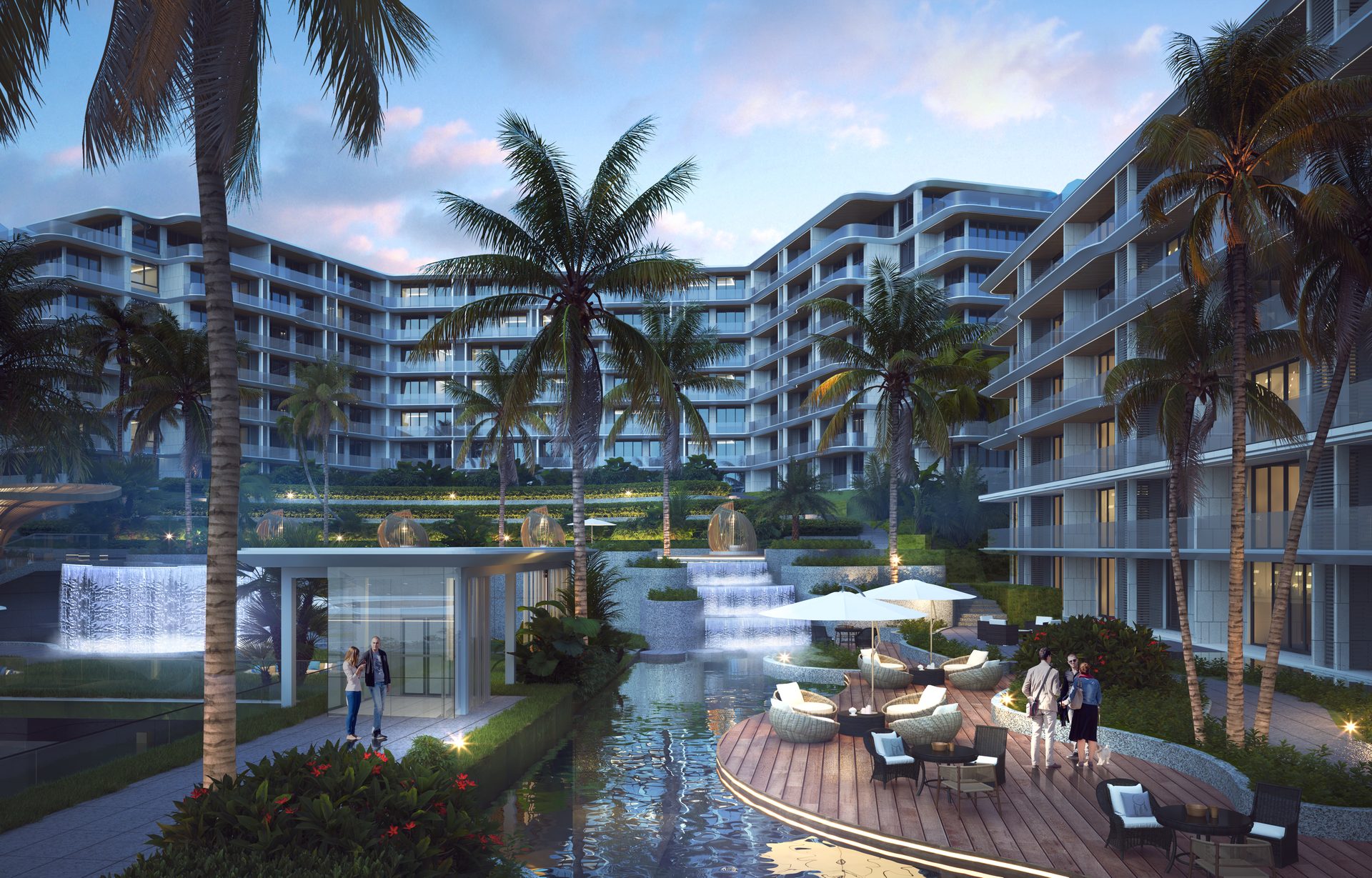
Thailand. Phuket's Layan Beach, on developer-direct pricing.
Seaview residences and villas near Layan Beach, Phuket — one of Thailand's most established beachfront addresses — sold developer-direct, with a PropSentral advisor to help you navigate Thailand's foreign ownership rules before you commit.
WhatsApp · Typically replies within 2 hours
1
Developer Partners
3
Projects Listed
49%
Foreign Condo Quota
THB
Currency
Jump to Section
How foreign ownership actually works in Thailand.
Thailand splits property law cleanly in two. Condominiums are governed by the Condominium Act: foreigners can own units outright, freehold, provided total foreign-owned floor space in the building stays under 49% of total saleable area — a rule the Land Department has tightened enforcement on through 2026 with a digital tracking system that flags buildings nearing their quota, targeting nominee-ownership structures specifically. Villas and standalone houses fall under the Land Code instead, which prohibits foreign land ownership outright — the practical route is a registered leasehold, typically 30 years with a renewal option, which sits outside the condo quota entirely. Either way, funds for a freehold condo purchase must arrive from overseas and be recorded on a Foreign Exchange Transaction Form (FETF) — a paperwork step, not a barrier, but one to plan for before wiring funds. Phuket's Layan Beach corridor is a genuinely established beachfront address, not a speculative frontier — which is exactly why unit-level quota availability (not headline pricing) is the first thing to check on any specific building.
Key Advantages
- Condominiums: 49% foreign-ownership quota per building, freehold — enforcement digitised and tightened through 2026, targeting nominee structures
- Villas and land: foreign ownership prohibited under the Land Code — the standard route is a registered 30-year leasehold with renewal option
- All freehold condo purchase funds must be remitted from overseas and recorded on a Foreign Exchange Transaction Form (FETF)
- Always check a specific building's remaining foreign quota before reserving — a popular building can fill its 49% allocation well ahead of full sell-out
- Layan Beach is an established, not speculative, Phuket address — infrastructure and amenity context are already in place
Thailand — Investment Scorecard
Nine indicators rated 1–10 by the PropSentral research team. Updated quarterly.
Observed Gross Rental Yield Range
5.2% – 6.8%
Per annum, based on active listings. Not guaranteed.
Tax Summary
Income Tax
Flat 15% withholding tax on gross rental income for non-residents, generally satisfying the Thai tax obligation
Capital Gains
No standalone capital gains tax layer — gains are captured within the transfer/withholding system; a Specific Business Tax of 3.3% of appraised/sale value (whichever is higher) applies if sold within 5 years of acquisition
Transfer Cost
Standard transfer, mortgage registration and stamp/business tax fees apply at the Land Department — confirm the current split directly, as several fees can apply depending on holding period
Mortgage Access
Max LTV
Very limited for non-resident foreigners — Thai banks generally do not lend to foreign buyers without local income or residency
Typical Rate
N/A for most foreign buyers — cash purchase or overseas financing is the standard route
Notes
Foreign buyers overwhelmingly purchase in cash. A handful of international/Thai banks offer foreigner-specific mortgage products at higher rates and lower LTV than domestic lending — confirm current availability directly
Residency Pathway
Programme
No property-linked golden-visa-style residency program — the Long-Term Resident (LTR) visa exists but is tied to income/investment criteria, not property purchase specifically
Threshold
N/A — property ownership alone does not confer Thai residency
Timeframe
N/A for a standard property purchase
Foreign mortgage access is genuinely limited in Thailand — most buyers purchase in cash. Property ownership does not confer Thai residency. Tax figures are indicative; consult a Thailand-licensed legal/tax advisor before investing. Scores are qualitative assessments by PropSentral and should not be relied upon as financial advice.
Economic Intelligence
Macro Indicators — Thailand
GDP growth, interest rate environment, currency trends, and tax impact for investors. Static data as of August/September 2026 (BOT rate, THB/USD); GDP data through 2026 estimate. Live charts sourced from BIS and FRED.
GDP Performance
Economic Output & Growth
USD billion. Source: IMF (compiled).
2023
+1.9%
2024
+2.5%
2026
+2.3%
Interest Rate Environment
Central Bank Rate vs THBFIX
Bank of Thailand (BOT Policy Rate)
1.00%
THBFIX
1.00%
What is THBFIX?
BOT's policy rate is the primary benchmark; foreign buyers on Thailand's standard 49% foreign-quota condo or 30-year leasehold villa structures rarely access Thai mortgage financing, so this rate matters more for the broader economy than for most transactions on this platform.
⚠️ The Bank of Thailand cut its policy rate to 1.00% by August 2026, its lowest since Q3 2022, after a 25bp cut in February 2026. A full historical monthly series was not compiled for this market.
Currency
LiveExchange Rate — Your Currency vs THB
The Baht is a free-floating currency, not pegged — it traded between roughly 30.8 and 33.8/USD through 2026, a real currency-risk factor for foreign buyers, though foreign nationals cannot own Thai land outright regardless of currency movement.
Latest rate — Sept 26· FRED
1 USD = 0.8692 THB
US Dollar → Thai Baht
Monthly averages — Federal Reserve Economic Data (FRED), cross-rates computed from USD pairs. For illustrative purposes only. Exchange rates fluctuate — consult your bank or FX broker for transaction rates.
Tax Profile
Property Taxes — Thailand
Foreign nationals cannot own Thai land — condos are owned via the 49% foreign-ownership quota per building; villas/land use 30-year leasehold structures instead
FETF (Foreign Exchange Transaction Form) documentation is required to repatriate sale proceeds — funds must have entered Thailand from abroad in foreign currency to qualify
The 49% foreign quota is tracked per building, not per project — confirm current quota availability on a specific unit before relying on foreign-ownership eligibility
Tax information is general guidance only and may not reflect current legislation. Always consult a qualified local tax adviser before purchasing or selling property.
Lifestyle Intelligence
Living in Thailand
Beyond the investment numbers — what does daily life actually cost, and what does it look like?
Cost of Living
Monthly Budget Estimates
Single Person
$2,000 – $3,000/mo
USD equivalent, including rent.
Couple
$3,000 – $5,000/mo
USD equivalent, including rent.
| Expense | Typical Range |
|---|---|
| Rent (1-bed) | USD 600–1,200/mo (Phuket beachfront/prime areas) |
| Rent (3-bed) | USD 1,500–3,500/mo (prime Phuket villas) |
| Groceries | USD 300–600/mo |
| Dining out | USD 300–800/mo (mix of local and Western dining) |
| Transport | USD 100–300/mo (scooter) · higher for car |
| Utilities | USD 150–400/mo (air conditioning-driven) |
| Entertainment | USD 200–600/mo |
| Health insurance | USD 100–300/mo (international health insurance) |
An affluent expat family in Phuket (luxury villa, international schooling, private healthcare) budgets roughly $8,300-22,200/month — school fees are typically the largest single line item.
Quality of Life
Lifestyle Scores
Safety
Crime rate, political stability, day-to-day security
Healthcare
Quality and accessibility of medical care
Climate
Weather, sunshine, and year-round liveability
Expat Community
Size and diversity of international resident base
Education
Quality and range of international schooling options
English Friendly
Daily life ease for English-only speakers
Education
Schools & Universities in Thailand
Phuket has an established international school sector serving its large tourism/hospitality-driven expat and long-term visitor community, with several accredited British and IB-affiliated options.
Available Curricula
Early Years (Ages 0–5)
A range of English-medium early years programmes operate across Phuket's expat-serving areas.
Primary (Ages 5–11)
British International School Phuket (BISP) and HeadStart International School both serve the primary-age international market.
Secondary (Ages 11–16)
BISP and UWC Thailand (a member of the United World Colleges network) extend through secondary.
Sixth Form / Pre-University (Ages 16–18)
UWC Thailand offers the full IB Diploma Programme as part of the globally-recognised United World Colleges network — a genuine differentiator for Phuket specifically.
International Schools
Universities & Higher Education
Top Schools
Annual Fee Range
USD 11,000 – 25,000
Healthcare
Medical Care in Thailand
Phuket has a genuinely strong private hospital sector by Southeast Asian standards, reflecting the island's status as a major international tourism and medical-tourism destination.
Public System
Private System
Health Insurance
Specialist Access
Top Facilities
Insurance Cost
USD 1,200–3,600 (individual)
Residency & Retirement
Visa Pathways
Thailand offers long-stay visa categories (including retirement-specific routes for those 50+) tied to income/deposit requirements rather than property purchase itself — see this market's own residency summary; property ownership alone does not grant residency.
Phuket pairs genuinely strong private healthcare and an established international school sector with real structural ownership limits (49% foreign condo quota, 30-year leasehold for villas/land) — see this market's economic profile for the full ownership-structure detail.
Why expats & retirees choose Thailand
- Bangkok Hospital Phuket offers JCI-accredited care at a fraction of Western/Gulf cost — a genuine medical tourism destination in its own right
- UWC Thailand's IB Diploma, part of the globally-recognised United World Colleges network, is a genuine differentiator
- One of the world's most established beach/lifestyle destinations, with deep tourism infrastructure
- Foreign land ownership is structurally limited (49% condo quota, 30-year leasehold) — a real, honest constraint, not a minor footnote
- No property-linked residency pathway — Thailand's long-stay visas are income/deposit-based, separate from property purchase
Climate
Annual Weather — Thailand
Phuket has a hot, humid tropical monsoon climate — a wet season driven by the southwest monsoon (May-Oct, heaviest Sep-Oct) and a drier, marginally cooler season (Nov-Apr) that is the main tourist/lifestyle window.
| Month | High °C | Low °C | Rain mm | Sun hrs/day | Humidity % |
|---|---|---|---|---|---|
| Jan★ | 32 | 24 | 35 | 9 | 71% |
| Feb★ | 33 | 24 | 35 | 9 | 70% |
| Mar | 33 | 25 | 75 | 9 | 72% |
| Apr | 33 | 26 | 135 | 8 | 76% |
| May | 31 | 25 | 265 | 6 | 80% |
| Jun | 31 | 24 | 245 | 6 | 80% |
| Jul | 30 | 24 | 260 | 5 | 81% |
| Aug | 30 | 24 | 265 | 5 | 81% |
| Sep▲ | 30 | 24 | 360 | 5 | 82% |
| Oct▲ | 30 | 24 | 305 | 6 | 81% |
| Nov★ | 30 | 24 | 165 | 7 | 78% |
| Dec★ | 31 | 23 | 60 | 8 | 73% |
Climate normals, approximate. ★ recommended months · ▲ peak heat / rain months.
Languages & Culture
Communication in Thailand
Official Language(s)
English Proficiency
MediumFor day-to-day expat navigation
Widely Spoken
Common Expat Languages
Business Language
Thai / English
Thai uses its own script, distinct from Latin — signage in Phuket's tourism areas is commonly bilingual, but government and legal documentation is in Thai and typically requires certified translation.
English is widely used in Phuket's tourism, hospitality and expat-facing real estate sectors specifically, reflecting the island's decades as an international tourism destination — day-to-day life outside these sectors runs in Thai.
Cost-of-living figures, named schools and hospitals are indicative and reviewed periodically, not live data — fees, admissions, accreditation and facility names can change. Confirm current details directly with the school or hospital, and current rent/cost figures with your PropSentral advisor, before relying on them for a relocation decision.
Editor's picks — 2 spotlight projects
Highest-quality inventory, curated by the PropSentral team.
AYANA (T.H Group)
AYANA Heights Seaview Residences
Near Layan Beach, Phuket, Thailand
AYANA (T.H Group)
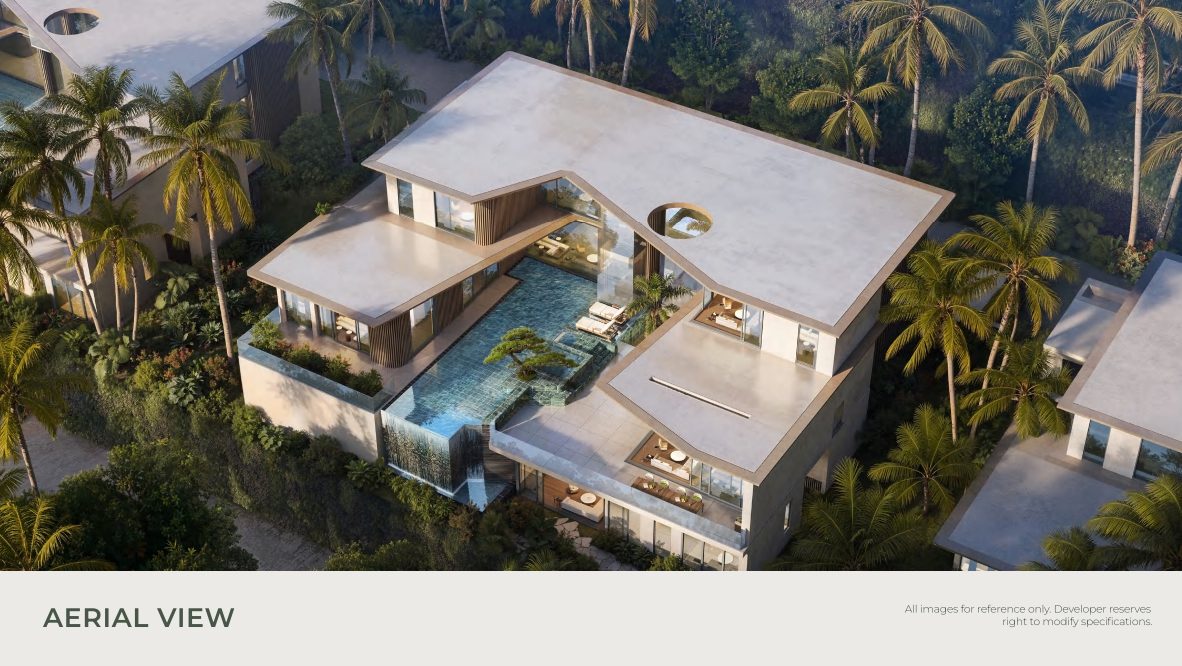
AYANA Soluna Villas
Phuket, Thailand
3 projects on PropSentral
Loading map…
Click any pin to view project details. Map shows approximate locations.
Common questions about Thailand
What is the cost of living in Thailand for expats?
A single person typically budgets USD 2,000–3,000/month, and a couple USD 3,000–5,000/month, excluding property costs. An affluent expat family in Phuket (luxury villa, international schooling, private healthcare) budgets roughly $8,300-22,200/month — school fees are typically the largest single line item.
What are the best international schools in Thailand?
Leading options include British International School Phuket, UWC Thailand, HeadStart International School. Phuket has an established international school sector serving its large tourism/hospitality-driven expat and long-term visitor community, with several accredited British and IB-affiliated options.
What are the top hospitals and healthcare facilities in Thailand?
Leading facilities include Bangkok Hospital Phuket, Dibuk Hospital, Bangkok Hospital Siriroj. Phuket has a genuinely strong private hospital sector by Southeast Asian standards, reflecting the island's status as a major international tourism and medical-tourism destination.
Can foreigners get residency in Thailand by buying property?
No property-linked golden-visa-style residency program — the Long-Term Resident (LTR) visa exists but is tied to income/investment criteria, not property purchase specifically. Threshold: N/A — property ownership alone does not confer Thai residency. N/A for a standard property purchase
What is the typical rental yield in Thailand?
Gross rental yields typically range 5.2–6.8% per annum based on active listings on PropSentral. This is indicative, not a guarantee — see this market's own investment intelligence section for the full breakdown.
Is there capital gains tax on property in Thailand?
No standalone capital gains tax layer — gains are captured within the transfer/withholding system; a Specific Business Tax of 3.3% of appraised/sale value (whichever is higher) applies if sold within 5 years of acquisition
What is the climate like in Thailand?
Phuket has a hot, humid tropical monsoon climate — a wet season driven by the southwest monsoon (May-Oct, heaviest Sep-Oct) and a drier, marginally cooler season (Nov-Apr) that is the main tourist/lifestyle window. Best months to visit: Nov, Dec, Jan, Feb.
What languages are spoken in Thailand?
The official language is Thai. English is widely used in Phuket's tourism, hospitality and expat-facing real estate sectors specifically, reflecting the island's decades as an international tourism destination — day-to-day life outside these sectors runs in Thai.
Answers are indicative, based on PropSentral's own market data and general guidance — always confirm current rates, fees and eligibility with a qualified local adviser before acting.
On This Page
Ready to invest in Thailand?
Browse developer-direct off-plan condominium and villa projects near Layan Beach, Phuket. Compare unit types and amenities — then speak with a PropSentral advisor about how foreign ownership actually works in Thailand.
WhatsApp · Typically replies within 2 hours