
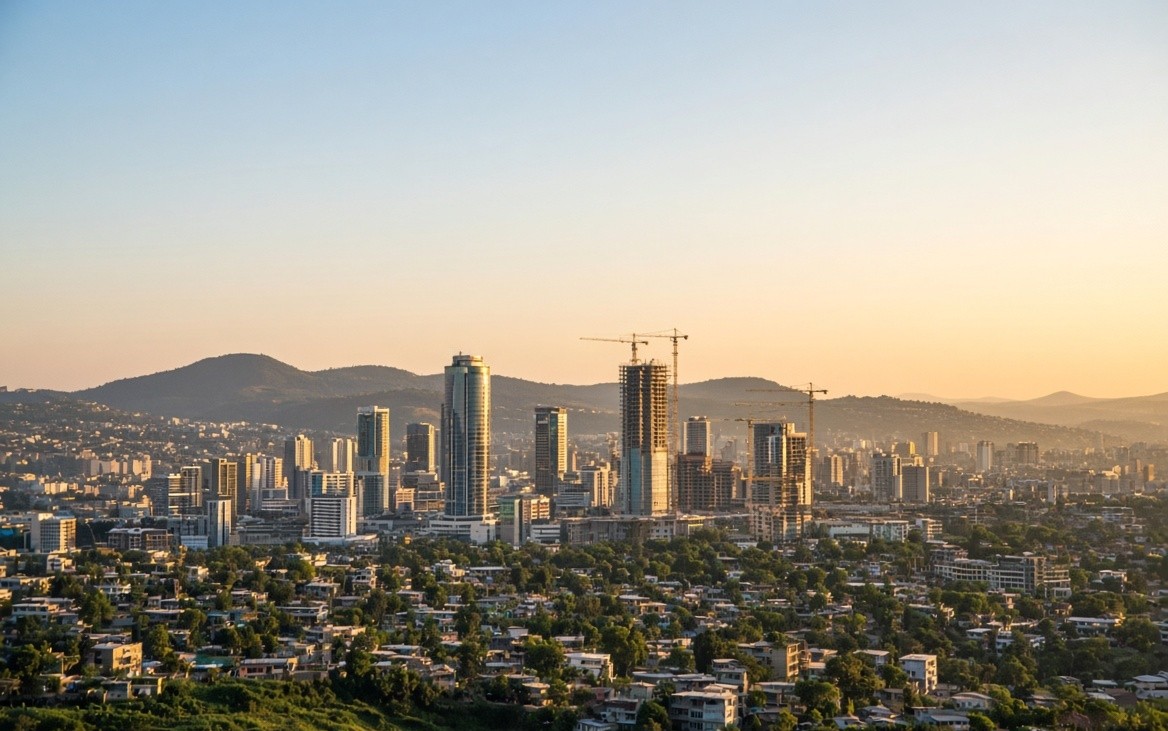
Ethiopia. Addis Ababa's newest frontier.
A landmark mixed-use development directly opposite the African Union Headquarters, in an economy the African Development Bank projects growing 7.2-7.8% through 2026 — among the fastest of any market on this platform. Foreign property ownership was only recently legalized here for the first time, making this a genuine frontier opportunity with correspondingly frontier-level risk.
WhatsApp · Typically replies within 2 hours
1
Developer Partners
1
Projects Listed
6–10%
Avg. Gross Yield
ETB
Currency
Jump to Section
Why investors are looking at Ethiopia — and what to watch closely.
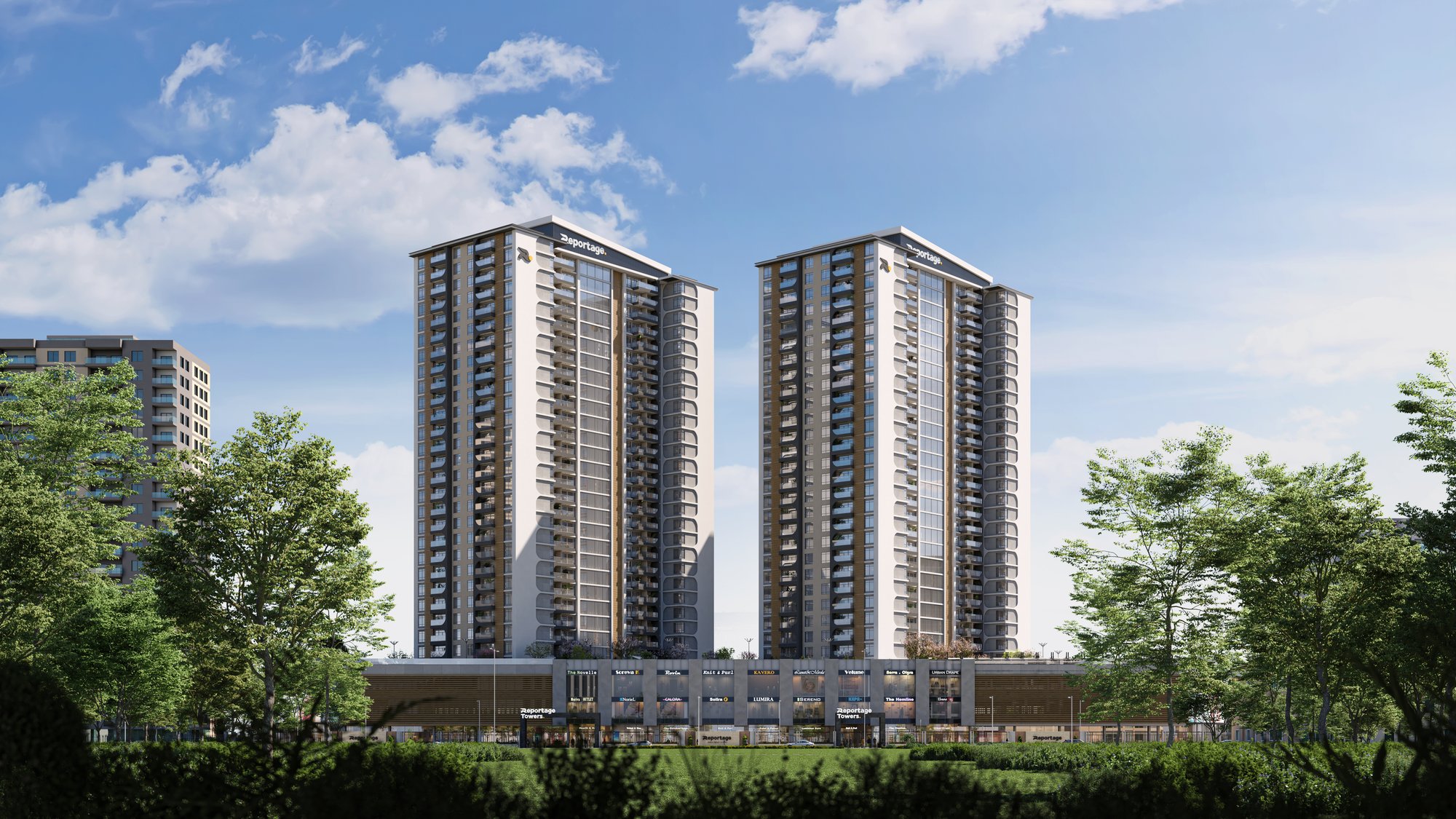
Ethiopia's GDP growth is among the fastest of any market on this platform — 7.2-7.8% projected for 2025/26, accelerating toward 8.5% in 2026/27 per the African Development Bank. Addis Ababa hosts the African Union, and Reportage Towers sits directly opposite its headquarters, delivered through a strategic partnership with the Ethiopian Defence Army Foundation under the Ministry of National Defence. This is genuinely the newest, least-established market on this platform for foreign real estate investment: foreign property ownership was only recently legalized for the first time, under a still-forming framework requiring a minimum USD 150,000 purchase and limiting foreigners to one residential property. A major 2024 currency reform produced a large, deliberate birr devaluation — the most significant recent currency event of any market featured here — and inflation has been rising, not easing, through 2026. Treat this as a genuine frontier opportunity paired with correspondingly frontier-level regulatory, currency and liquidity risk, and expect meaningfully more uncertainty than any other market on this platform.
Key Advantages
- GDP growth among the fastest of any market on this platform — 7.2-7.8% projected for 2025/26, accelerating toward 8.5% in 2026/27
- Foreign property ownership only recently legalized for the first time — minimum USD 150,000 purchase, one-property limit, residential use only
- Land itself cannot be privately owned by anyone in Ethiopia, citizens included — a universal leasehold system, not foreign-specific
- A major 2024 FX reform produced a large, deliberate birr devaluation (now trading around 155/USD) — model this explicitly
- Inflation moving the wrong way — from 9.7% (December 2025) to 13.4% (May 2026)
- The newest, least-established market on this platform — genuine frontier opportunity, genuine frontier-level risk
Ethiopia — Investment Scorecard
Nine indicators rated 1–10 by the PropSentral research team. Updated quarterly.
Observed Gross Rental Yield Range
6% – 10%
Per annum, based on active listings. Not guaranteed.
Tax Summary
Income Tax
Not fully compiled for this market — reconfirm directly, especially given how new the foreign-ownership framework is
Capital Gains
Not fully compiled for this market — reconfirm directly
Transfer Cost
Not compiled for this market — reconfirm directly
Mortgage Access
Max LTV
Essentially unavailable to non-resident foreigners — Ethiopia's mortgage market for foreign buyers is brand new given the ownership framework itself only recently opened
Typical Rate
National Bank of Ethiopia policy rate 15-17% (tight stance through 2026) — one of the highest rate environments of any market on this platform
Notes
Foreign buyers should expect to purchase in cash or via developer instalment plans — local mortgage financing is not a realistic near-term option
Residency Pathway
Programme
No dedicated golden-visa-style residency-by-property-investment program identified
Threshold
N/A — property ownership itself does not confer residency
Timeframe
N/A
Ethiopia only recently opened foreign property ownership for the first time, under a still-forming legal framework (minimum USD 150,000 purchase, one-property limit), alongside a major 2024 currency reform and elevated, rising inflation. This is the highest-risk, least-established market featured on this platform — consult an Ethiopia-licensed legal/tax advisor before investing, and expect meaningfully more regulatory uncertainty than any other market here. Scores are qualitative assessments by PropSentral and should not be relied upon as financial advice.
Economic Intelligence
Macro Indicators — Ethiopia
GDP growth, interest rate environment, currency trends, and tax impact for investors. Static data as of Mid-2026 (NBE rate, ETB/USD rate, approximate); GDP data through 2024, figures inconsistent across sources. Live charts sourced from BIS and FRED.
GDP Performance
Economic Output & Growth
USD billion. Source: Compiled from World Bank / local reporting (current US$) — figures vary materially by source, reflecting Ethiopia's July-June fiscal year and the distorting effect of the 2024 currency reform on USD conversions; treat as directionally indicative only.
2023
+7.2%
2024
+8.1%
Interest Rate Environment
Central Bank Rate vs NBE Policy Rate
National Bank of Ethiopia (NBE) Policy Rate
16.00%
NBE Policy Rate
16.00%
What is NBE Policy Rate?
Ethiopia does not have a widely-quoted interbank offered rate equivalent to EIBOR/SAIBOR — the NBE's policy rate is the primary benchmark referenced for local commercial lending margins.
⚠️ NBE has held a tight policy stance through 2026, with the rate in a 15-17% range alongside an 18% credit growth ceiling — one of the highest rate environments of any market on this platform. A full historical monthly series was not compiled for this market.
Currency
LiveExchange Rate — Your Currency vs ETB
The birr moved to a market-based, competitively-determined exchange rate under a major 2024 reform (previously a more controlled regime) — a deliberate, large devaluation event. It now trades around 155/USD. This is a currency with genuinely major recent volatility that should be modelled explicitly, not treated as background noise.
Latest rate — Sept 26· FRED
1 USD = 0.8692 ETB
US Dollar → Ethiopian Birr
Monthly averages — Federal Reserve Economic Data (FRED), cross-rates computed from USD pairs. For illustrative purposes only. Exchange rates fluctuate — consult your bank or FX broker for transaction rates.
Tax Profile
Property Taxes — Ethiopia
Foreign property ownership was only recently legalized for the first time — a 2026 reform framework requires a minimum USD 150,000 purchase price, limits foreigners to one residential property (with exceptions for qualifying investors), and restricts use to residential purposes
Land cannot be privately owned by anyone in Ethiopia — the constitution reserves land ownership for the state, and all property sits on a leasehold basis regardless of nationality
Given how new this framework is, tax treatment specifics were not reliably found and should be confirmed directly with an Ethiopia-licensed advisor before any transaction
Tax information is general guidance only and may not reflect current legislation. Always consult a qualified local tax adviser before purchasing or selling property.
Lifestyle Intelligence
Living in Ethiopia
Beyond the investment numbers — what does daily life actually cost, and what does it look like?
Cost of Living
Monthly Budget Estimates
Single Person
$1,200 – $2,000/mo
USD equivalent, including rent.
Couple
$1,800 – $3,000/mo
USD equivalent, including rent.
| Expense | Typical Range |
|---|---|
| Rent (1-bed) | USD 400–800/mo (Bole, Old Airport, Kazanchis) |
| Rent (3-bed) | USD 900–1,800/mo (prime Addis Ababa areas) |
| Groceries | USD 200–400/mo |
| Dining out | USD 150–400/mo |
| Transport | USD 150–350/mo |
| Utilities | USD 100–250/mo |
| Entertainment | USD 150–400/mo |
| Health insurance | USD 100–300/mo (international health insurance) |
Addis Ababa is genuinely affordable for day-to-day living, reflecting Ethiopia's position as an African Union diplomatic hub with a correspondingly established (if compact) expat services sector.
Quality of Life
Lifestyle Scores
Safety
Crime rate, political stability, day-to-day security
Healthcare
Quality and accessibility of medical care
Climate
Weather, sunshine, and year-round liveability
Expat Community
Size and diversity of international resident base
Education
Quality and range of international schooling options
English Friendly
Daily life ease for English-only speakers
Education
Schools & Universities in Ethiopia
Addis Ababa's international school sector reflects its role as the African Union's diplomatic capital — a genuinely broad range of national and international schools for a market this size, serving a large embassy and NGO community.
Available Curricula
Early Years (Ages 0–5)
Good Beginnings Daycare and Preschool and similar operators serve Addis Ababa's expat-facing early years market.
Primary (Ages 5–11)
International Community School of Addis Ababa (ICS), Sandford International School and Bingham Academy are among the established primary options.
Secondary (Ages 11–16)
British International School Ethiopia and Andinet International School extend international curricula through secondary.
Sixth Form / Pre-University (Ages 16–18)
International Community School and British International School Ethiopia both offer routes through to university-entry qualifications.
International Schools
Universities & Higher Education
Top Schools
Annual Fee Range
USD 5,000 – 15,000 (indicative)
Healthcare
Medical Care in Ethiopia
Addis Ababa has a mix of major public referral hospitals and smaller private clinics; expats typically combine private clinic care for routine needs with international insurance covering evacuation for complex cases.
Public System
Private System
Health Insurance
Specialist Access
Top Facilities
Insurance Cost
USD 1,200–3,600 (individual, incl. evacuation cover)
Residency & Retirement
Visa Pathways
No dedicated golden-visa-style residency-by-property-investment program identified — see this market's own residency summary.
Addis Ababa is genuinely affordable and benefits from a broader-than-expected international school sector given its African Union diplomatic status, with healthcare the area requiring the most careful planning (evacuation cover recommended).
Why expats & retirees choose Ethiopia
- A genuinely diverse international school sector for a market this size, reflecting Addis Ababa's African Union diplomatic status
- Pleasant highland climate year-round (see this market's weather profile) — a genuine differentiator from lowland tropical Africa
- Genuinely affordable day-to-day cost of living
- One of Africa's fastest-growing economies with real, ongoing infrastructure investment (see this market's economic profile)
- Healthcare requires the most careful planning of any factor here — comprehensive insurance with evacuation cover is genuinely prudent, not optional
Climate
Annual Weather — Ethiopia
Addis Ababa sits at roughly 2,355m — one of the highest capital cities in the world — giving it a remarkably mild, spring-like climate year-round despite its near-equatorial location. The main rainy season (Jun-Sep, "Kiremt") brings the bulk of annual rainfall.
| Month | High °C | Low °C | Rain mm | Sun hrs/day | Humidity % |
|---|---|---|---|---|---|
| Jan★ | 24 | 6 | 15 | 8 | 50% |
| Feb★ | 25 | 8 | 30 | 8 | 48% |
| Mar | 25 | 9 | 60 | 7 | 52% |
| Apr | 24 | 10 | 85 | 6 | 58% |
| May | 25 | 10 | 85 | 7 | 55% |
| Jun | 23 | 10 | 135 | 5 | 62% |
| Jul▲ | 21 | 11 | 280 | 3 | 74% |
| Aug▲ | 21 | 11 | 290 | 3 | 75% |
| Sep | 22 | 10 | 150 | 5 | 68% |
| Oct★ | 23 | 8 | 30 | 7 | 55% |
| Nov★ | 23 | 6 | 10 | 8 | 50% |
| Dec★ | 23 | 5 | 5 | 8 | 48% |
Climate normals, approximate. ★ recommended months · ▲ peak heat / rain months.
Languages & Culture
Communication in Ethiopia
Official Language(s)
English Proficiency
MediumFor day-to-day expat navigation
Widely Spoken
Common Expat Languages
Business Language
Amharic / English
Amharic uses its own Ge'ez script, distinct from Arabic or Latin scripts used elsewhere on this platform — a genuine, real consideration for signage and documentation, though English is the medium of instruction in Ethiopia's international schools.
English is the medium of instruction in secondary and higher education and is widely used in international business, diplomatic and NGO circles — genuinely functional given Addis Ababa's status as the African Union's diplomatic capital — but Amharic (written in its own Ge'ez script) is the everyday language of government and much of daily life.
Cost-of-living figures, named schools and hospitals are indicative and reviewed periodically, not live data — fees, admissions, accreditation and facility names can change. Confirm current details directly with the school or hospital, and current rent/cost figures with your PropSentral advisor, before relying on them for a relocation decision.
1 project on PropSentral
Loading map…
Click any pin to view project details. Map shows approximate locations.
Common questions about Ethiopia
What is the cost of living in Ethiopia for expats?
A single person typically budgets USD 1,200–2,000/month, and a couple USD 1,800–3,000/month, excluding property costs. Addis Ababa is genuinely affordable for day-to-day living, reflecting Ethiopia's position as an African Union diplomatic hub with a correspondingly established (if compact) expat services sector.
What are the best international schools in Ethiopia?
Leading options include International Community School of Addis Ababa, Sandford International School, British International School Ethiopia. Addis Ababa's international school sector reflects its role as the African Union's diplomatic capital — a genuinely broad range of national and international schools for a market this size, serving a large embassy and NGO community.
What are the top hospitals and healthcare facilities in Ethiopia?
Leading facilities include St. Paul's Hospital Millennium Medical College, Black Lion Hospital, Bethzatha Hospital. Addis Ababa has a mix of major public referral hospitals and smaller private clinics; expats typically combine private clinic care for routine needs with international insurance covering evacuation for complex cases.
Can foreigners get residency in Ethiopia by buying property?
No dedicated golden-visa-style residency-by-property-investment program identified. Threshold: N/A — property ownership itself does not confer residency. N/A
What is the typical rental yield in Ethiopia?
Gross rental yields typically range 6–10% per annum based on active listings on PropSentral. This is indicative, not a guarantee — see this market's own investment intelligence section for the full breakdown.
Is there capital gains tax on property in Ethiopia?
Not fully compiled for this market — reconfirm directly
What is the climate like in Ethiopia?
Addis Ababa sits at roughly 2,355m — one of the highest capital cities in the world — giving it a remarkably mild, spring-like climate year-round despite its near-equatorial location. The main rainy season (Jun-Sep, "Kiremt") brings the bulk of annual rainfall. Best months to visit: Oct, Nov, Dec, Jan, Feb.
What languages are spoken in Ethiopia?
The official language is Amharic. English is the medium of instruction in secondary and higher education and is widely used in international business, diplomatic and NGO circles — genuinely functional given Addis Ababa's status as the African Union's diplomatic capital — but Amharic (written in its own Ge'ez script) is the everyday language of government and much of daily life.
Answers are indicative, based on PropSentral's own market data and general guidance — always confirm current rates, fees and eligibility with a qualified local adviser before acting.
On This Page
Ready to invest in Ethiopia?
Browse a developer-direct off-plan mixed-use tower in Addis Ababa. Compare unit types and amenities — then speak with a PropSentral advisor when you're ready to move forward.
WhatsApp · Typically replies within 2 hours