
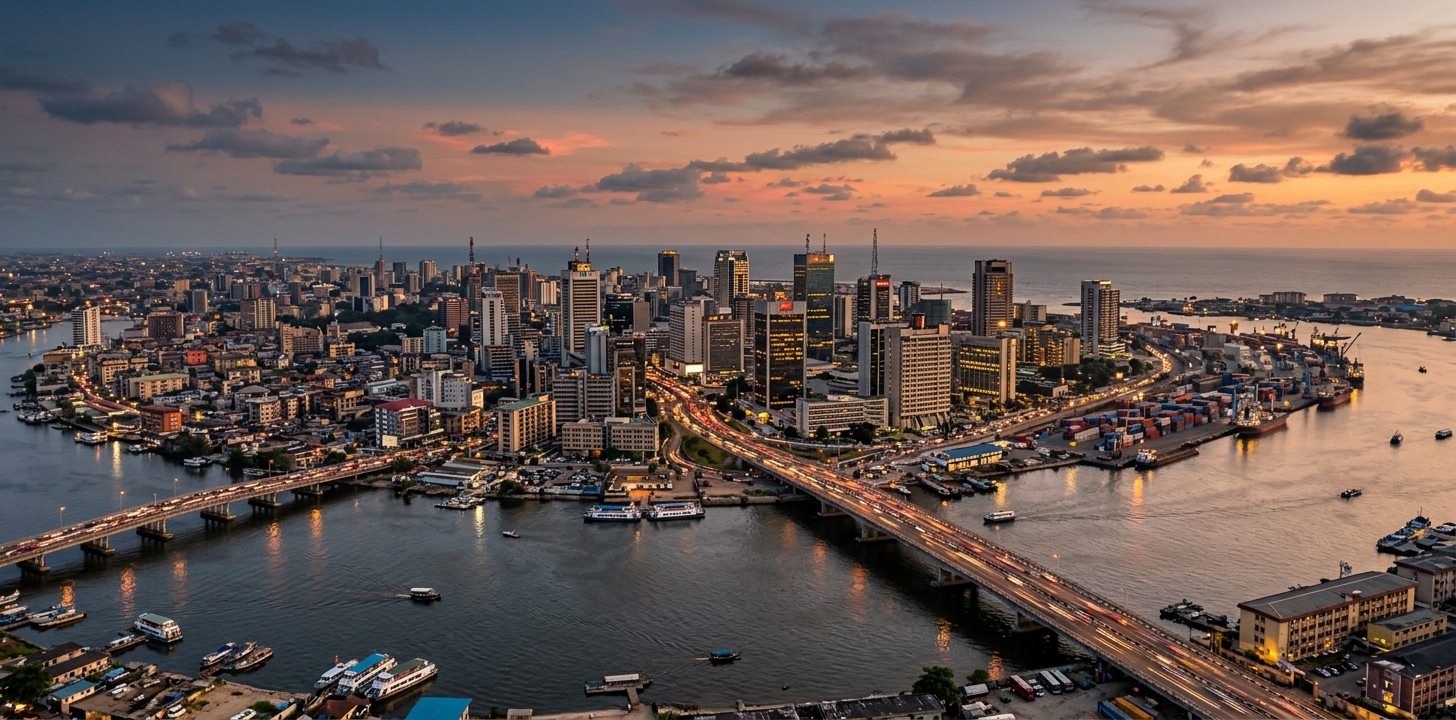
Nigeria. Lagos's Victoria Island waterfront.
International-standard hotel apartments on Ozumba Mbadiwe, Victoria Island — Lagos's most prestigious waterfront address — in West Africa's largest economy, where the Central Bank of Nigeria projects GDP growth accelerating to 4.49% for 2026.
WhatsApp · Typically replies within 2 hours
1
Developer Partners
1
Projects Listed
6–10%
Avg. Gross Yield
NGN
Currency
Jump to Section
Why investors are looking at Nigeria.
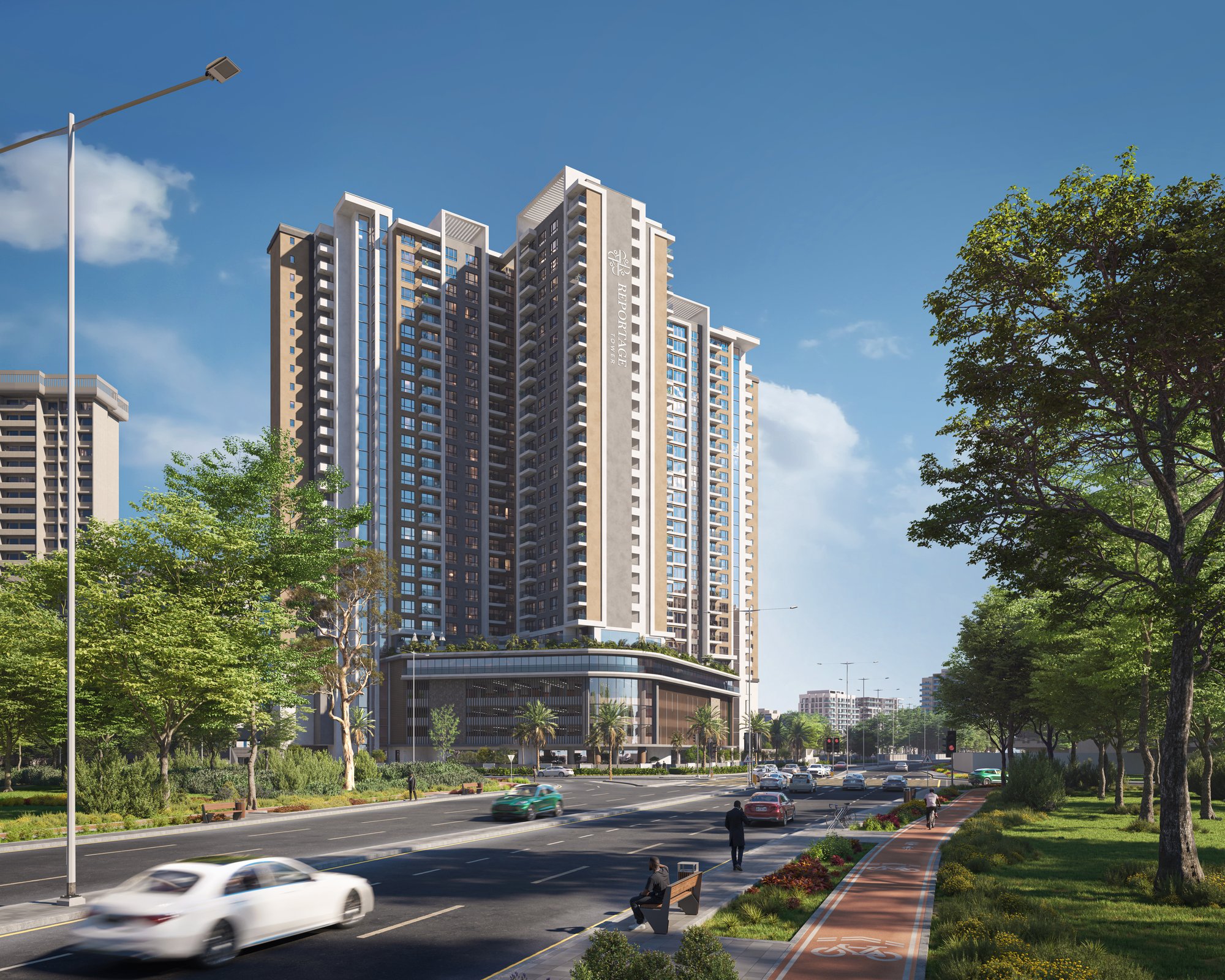
Nigeria's GDP growth is projected to accelerate to 4.49% in 2026, and inflation has eased substantially — from a peak of 33.2% down to roughly 23%, with the Central Bank of Nigeria targeting a 12-16% range for 2026 as tight monetary policy takes hold. Victoria Island's Ozumba Mbadiwe waterfront remains Lagos's most prestigious business and residential address, and Reportage Tower brings international hotel-apartment standards to that setting. Foreign buyers should note a structural point unique to this market on the platform: under Nigeria's Land Use Act, all land — including for citizens — is held as a state-granted Right of Occupancy rather than freehold, but foreigners specifically receive a materially shorter maximum term (up to 25 years, versus longer terms for citizens) and require the state Governor's consent; acquiring through a Nigerian-registered entity is the common route investors use for a longer effective term. The naira has also been comparatively calmer through 2026, though its severe 2023-2024 devaluation history is recent enough to underwrite explicitly rather than assume away.
Key Advantages
- GDP growth around 4.0% in 2025, projected to reach 4.49% in 2026
- Inflation eased from 33.2% to roughly 23%, targeting a 12-16% range for 2026
- Foreigners receive a materially shorter land-tenure term (up to 25 years) than citizens under the Land Use Act — acquiring through a Nigerian-registered entity is the common workaround for a longer effective term
- NGN has been comparatively calmer through 2026 after the severe 2023-2024 devaluation crisis
- Victoria Island, Lagos is Nigeria's most prestigious waterfront business and residential address
- CBN's Monetary Policy Rate sits at 26.5% — one of the highest rate environments of any market on this platform, making developer payment plans typically more attractive than local mortgage financing
Nigeria — Investment Scorecard
Nine indicators rated 1–10 by the PropSentral research team. Updated quarterly.
Observed Gross Rental Yield Range
6% – 10%
Per annum, based on active listings. Not guaranteed.
Tax Summary
Income Tax
Rental income from Nigerian property is taxable regardless of the owner's residence; non-residents are taxed only on Nigerian-sourced income
Capital Gains
Since the Nigeria Tax Act 2025 (effective 1 January 2026), individual property gains are folded into personal income tax bands rather than a flat rate — up to 25% depending on income band
Transfer Cost
Not compiled for this market — reconfirm directly
Mortgage Access
Max LTV
Very limited for non-resident foreigners — Nigeria's mortgage market is underdeveloped even by regional standards
Typical Rate
CBN Monetary Policy Rate 26.5% (May 2026, after a 50bp cut from 27.0%) — one of the highest policy-rate environments of any market on this platform
Notes
Most foreign buyers purchase in cash or via developer instalment plans; local mortgage financing at this rate level is rarely competitive
Residency Pathway
Programme
No dedicated golden-visa-style residency-by-property-investment program identified
Threshold
N/A — property ownership itself does not confer residency
Timeframe
N/A
Nigeria grants foreigners a materially shorter land-tenure term than citizens (up to 25 years, subject to Governor's consent) unless routed through a Nigerian-registered entity, and carries real currency-devaluation history. Consult a Nigeria-licensed legal/tax advisor before investing. Scores are qualitative assessments by PropSentral and should not be relied upon as financial advice.
Economic Intelligence
Macro Indicators — Nigeria
GDP growth, interest rate environment, currency trends, and tax impact for investors. Static data as of May/August 2026 (CBN MPR, NGN/USD rate); GDP data through 2024. Live charts sourced from BIS and FRED.
GDP Performance
Economic Output & Growth
USD billion. Source: Compiled from World Bank/CBN-linked reporting (current US$) — Nigeria's nominal USD GDP swung sharply across this period due to the 2023-2024 naira devaluation, so single-year comparisons understate real local-currency growth.
2022
+3.3%
2023
+3.1%
2024
+3.4%
Interest Rate Environment
Central Bank Rate vs CBN MPR
Central Bank of Nigeria (CBN) Monetary Policy Rate (MPR)
26.50%
CBN MPR
26.50%
What is CBN MPR?
Nigeria does not have a widely-quoted interbank offered rate equivalent to EIBOR/SAIBOR for this purpose — the CBN's Monetary Policy Rate is the primary benchmark referenced for local commercial lending margins.
⚠️ CBN cut its MPR by 50bp to 26.5% in February 2026 (from 27.0%) and held it there in May 2026 — one of the highest policy-rate environments of any market on this platform, reflecting an aggressive multi-year inflation-fighting stance. A full historical monthly series was not compiled for this market.
Currency
LiveExchange Rate — Your Currency vs NGN
The NGN is a free-floating currency with a severe 2023-2024 devaluation history. It has traded comparatively calmer through 2026, in a roughly 1,338-1,445/USD range (averaging ~1,374.58/USD) — but that recent crisis history means currency risk should still be modelled explicitly, not assumed away.
Latest rate — Sept 26· FRED
1 USD = 0.8692 NGN
US Dollar → Nigerian Naira
Monthly averages — Federal Reserve Economic Data (FRED), cross-rates computed from USD pairs. For illustrative purposes only. Exchange rates fluctuate — consult your bank or FX broker for transaction rates.
Tax Profile
Property Taxes — Nigeria
All land in Nigeria is held as a state-granted Right of Occupancy (Land Use Act), not freehold — this applies to citizens too, but foreigners specifically receive a shorter maximum term (up to 25 years) and require the state Governor's consent
Acquiring property through a Nigerian-registered company/entity is the common route for foreign investors seeking a longer effective term
The 2025 Tax Act (effective January 2026) is newly in force — reconfirm current treatment directly given the recency of the change
Tax information is general guidance only and may not reflect current legislation. Always consult a qualified local tax adviser before purchasing or selling property.
Lifestyle Intelligence
Living in Nigeria
Beyond the investment numbers — what does daily life actually cost, and what does it look like?
Cost of Living
Monthly Budget Estimates
Single Person
$1,800 – $3,000/mo
USD equivalent, including rent.
Couple
$2,800 – $4,500/mo
USD equivalent, including rent.
| Expense | Typical Range |
|---|---|
| Rent (1-bed) | NGN 800,000–2,000,000/mo (Victoria Island, Ikoyi, Lekki) |
| Rent (3-bed) | NGN 2,000,000–5,000,000/mo (prime Lagos areas) |
| Groceries | NGN 250,000–500,000/mo |
| Dining out | NGN 200,000–600,000/mo |
| Transport | NGN 300,000–800,000/mo (car/driver, given Lagos traffic) |
| Utilities | NGN 150,000–400,000/mo (generator fuel is a real, ongoing cost given grid reliability) |
| Entertainment | NGN 200,000–600,000/mo |
| Health insurance | USD 150–400/mo (comprehensive medical insurance with evacuation cover) |
Lagos is Nigeria's most expensive city and one of the more expensive on this platform for comparable rent, reflecting genuine security and infrastructure premiums for expat-standard housing (generators, backup water, security staff).
Quality of Life
Lifestyle Scores
Safety
Crime rate, political stability, day-to-day security
Healthcare
Quality and accessibility of medical care
Climate
Weather, sunshine, and year-round liveability
Expat Community
Size and diversity of international resident base
Education
Quality and range of international schooling options
English Friendly
Daily life ease for English-only speakers
Education
Schools & Universities in Nigeria
Lagos has a genuinely well-established international school sector — Victoria Island and Lekki host several long-running American and British schools serving a large diplomatic, oil-and-gas and business expat community.
Available Curricula
Early Years (Ages 0–5)
A wide range of English-medium nurseries operate across Victoria Island, Ikoyi and Lekki.
Primary (Ages 5–11)
American International School of Lagos (AISL, founded 1964) and British International School Lagos (BIS, founded 2001) both offer established primary programmes.
Secondary (Ages 11–16)
AISL, BIS and Lekki British School (founded 2000) all extend through secondary.
Sixth Form / Pre-University (Ages 16–18)
AISL is authorised to offer the full IB Diploma Programme alongside the American High School Diploma — a genuinely dual-accredited option.
International Schools
Universities & Higher Education
Top Schools
Annual Fee Range
USD 8,000 – 25,000
Healthcare
Medical Care in Nigeria
Public healthcare in Lagos is genuinely under-resourced; expats rely on a smaller number of private hospitals and clinics, with comprehensive insurance including medical evacuation cover considered essential.
Public System
Private System
Health Insurance
Specialist Access
Top Facilities
Insurance Cost
USD 1,800–4,800 (individual, incl. evacuation cover)
Residency & Retirement
Visa Pathways
No dedicated golden-visa-style residency-by-property-investment program identified — see this market's own residency summary.
Lagos carries genuine security and infrastructure costs (generators, backup water, security staff) baked into expat-standard housing, and comprehensive medical evacuation insurance is essential rather than optional — both real, honest considerations for this market.
Why expats & retirees choose Nigeria
- American International School of Lagos offers a genuinely dual-accredited American Diploma + IB pathway
- English is the official language and functional business language — no language barrier for daily life
- Africa's largest city and economy, with genuine scale and business opportunity
- Real infrastructure premiums (power, water, security) are baked into expat-standard housing costs — budget for this honestly
- Comprehensive medical insurance with evacuation cover is essential, not optional, given the limited depth of local specialist care
Climate
Annual Weather — Nigeria
Lagos has a hot, humid tropical climate year-round with a pronounced wet season (Apr-Oct, heaviest Jun-Jul) and a shorter, still-humid dry season (Nov-Mar) — genuinely one of the more humid climates on this platform.
| Month | High °C | Low °C | Rain mm | Sun hrs/day | Humidity % |
|---|---|---|---|---|---|
| Jan★ | 31 | 23 | 15 | 6 | 78% |
| Feb★ | 32 | 25 | 45 | 6 | 79% |
| Mar | 32 | 25 | 105 | 6 | 80% |
| Apr | 31 | 25 | 150 | 6 | 81% |
| May | 30 | 24 | 270 | 5 | 83% |
| Jun▲ | 29 | 23 | 370 | 4 | 85% |
| Jul▲ | 28 | 23 | 270 | 4 | 85% |
| Aug | 27 | 23 | 65 | 4 | 84% |
| Sep | 28 | 23 | 180 | 4 | 85% |
| Oct | 29 | 23 | 195 | 5 | 83% |
| Nov | 31 | 24 | 65 | 6 | 79% |
| Dec★ | 31 | 24 | 25 | 6 | 78% |
Climate normals, approximate. ★ recommended months · ▲ peak heat / rain months.
Languages & Culture
Communication in Nigeria
Official Language(s)
English Proficiency
HighFor day-to-day expat navigation
Widely Spoken
Common Expat Languages
Business Language
English
English is the sole official language and the practical language of business, government, law and international schooling — a genuine, significant advantage for English-speaking buyers, distinct from most other African markets on this platform which are more French or Arabic-influenced. Yoruba is the dominant local language in Lagos specifically.
Cost-of-living figures, named schools and hospitals are indicative and reviewed periodically, not live data — fees, admissions, accreditation and facility names can change. Confirm current details directly with the school or hospital, and current rent/cost figures with your PropSentral advisor, before relying on them for a relocation decision.
1 project on PropSentral
Loading map…
Click any pin to view project details. Map shows approximate locations.
Common questions about Nigeria
What is the cost of living in Nigeria for expats?
A single person typically budgets USD 1,800–3,000/month, and a couple USD 2,800–4,500/month, excluding property costs. Lagos is Nigeria's most expensive city and one of the more expensive on this platform for comparable rent, reflecting genuine security and infrastructure premiums for expat-standard housing (generators, backup water, security staff).
What are the best international schools in Nigeria?
Leading options include American International School of Lagos, British International School Lagos, Lekki British School. Lagos has a genuinely well-established international school sector — Victoria Island and Lekki host several long-running American and British schools serving a large diplomatic, oil-and-gas and business expat community.
What are the top hospitals and healthcare facilities in Nigeria?
Leading facilities include Reddington Hospital, Lagos University Teaching Hospital, Lagos State University Teaching Hospital. Public healthcare in Lagos is genuinely under-resourced; expats rely on a smaller number of private hospitals and clinics, with comprehensive insurance including medical evacuation cover considered essential.
Can foreigners get residency in Nigeria by buying property?
No dedicated golden-visa-style residency-by-property-investment program identified. Threshold: N/A — property ownership itself does not confer residency. N/A
What is the typical rental yield in Nigeria?
Gross rental yields typically range 6–10% per annum based on active listings on PropSentral. This is indicative, not a guarantee — see this market's own investment intelligence section for the full breakdown.
Is there capital gains tax on property in Nigeria?
Since the Nigeria Tax Act 2025 (effective 1 January 2026), individual property gains are folded into personal income tax bands rather than a flat rate — up to 25% depending on income band
What is the climate like in Nigeria?
Lagos has a hot, humid tropical climate year-round with a pronounced wet season (Apr-Oct, heaviest Jun-Jul) and a shorter, still-humid dry season (Nov-Mar) — genuinely one of the more humid climates on this platform. Best months to visit: Dec, Jan, Feb.
What languages are spoken in Nigeria?
The official language is English. English is the sole official language and the practical language of business, government, law and international schooling — a genuine, significant advantage for English-speaking buyers, distinct from most other African markets on this platform which are more French or Arabic-influenced. Yoruba is the dominant local language in Lagos specifically.
Answers are indicative, based on PropSentral's own market data and general guidance — always confirm current rates, fees and eligibility with a qualified local adviser before acting.
On This Page
Ready to invest in Nigeria?
Browse a developer-direct off-plan hotel-apartment tower on Victoria Island, Lagos. Compare unit types and amenities — then speak with a PropSentral advisor when you're ready to move forward.
WhatsApp · Typically replies within 2 hours